So I just finished the first week of Liz Steel’s SketchingNow Travel Sketching course. I wrote about my material list for this course here and about the beginning of the first week here.
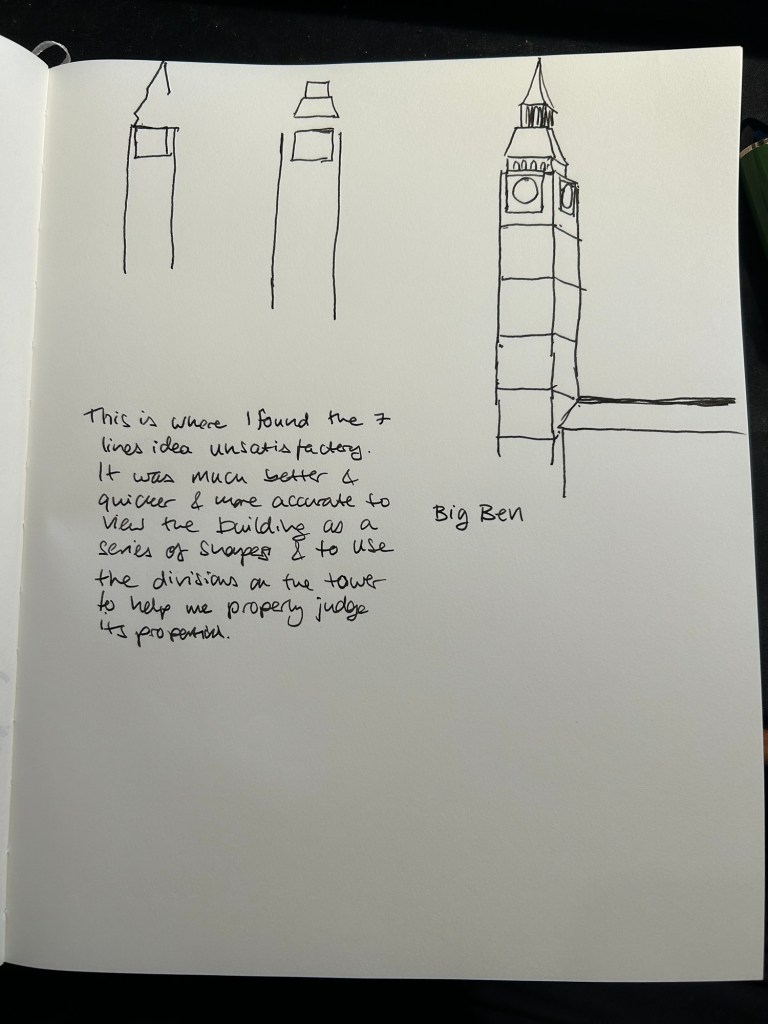
Liz started the week by suggesting that we approach sketching while travelling using a 7 lines principle: sketch the scene in 7 lines, which you can then flesh out to a full sketch. While I managed to do this for the first three Eiffel Tower sketches, I started to struggle once we got to complex buildings like the Big Ben.
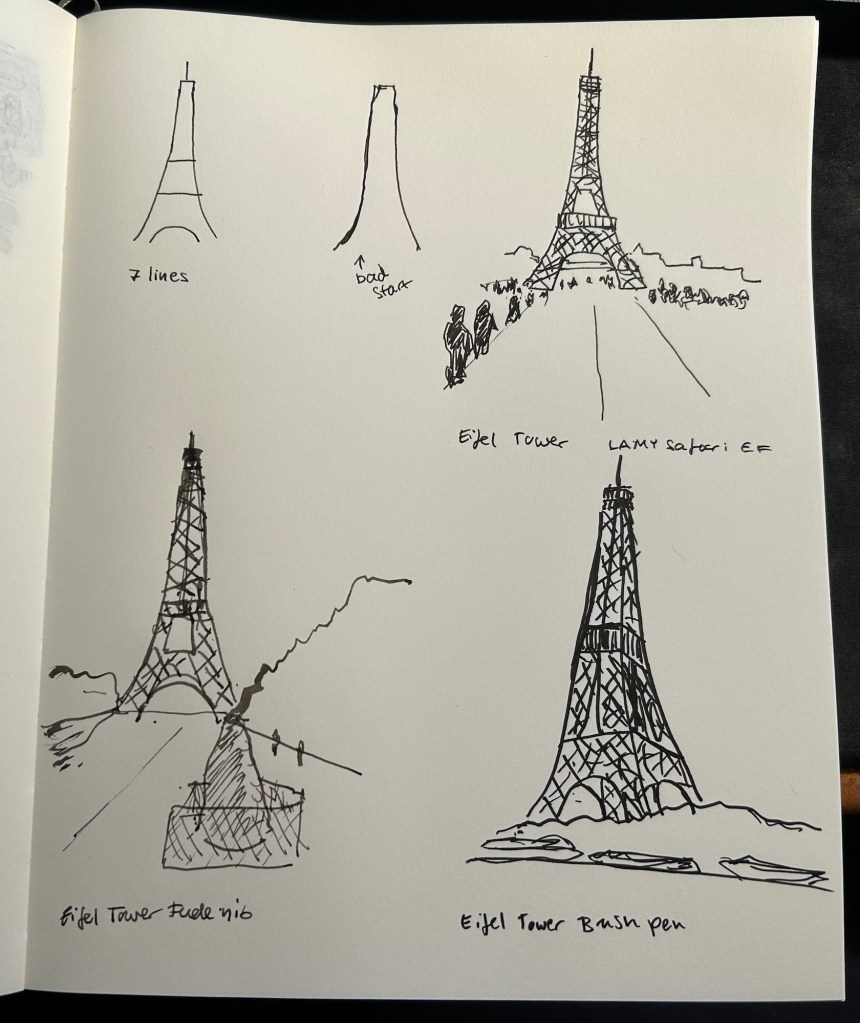
Here’s my two initial attempts with 7 lines, and then where I moved to my usual approach, which is trying to break a scene down to simple shapes (square, circle, triangle, etc).
I then sketched the next assigned subjects using my own approach:
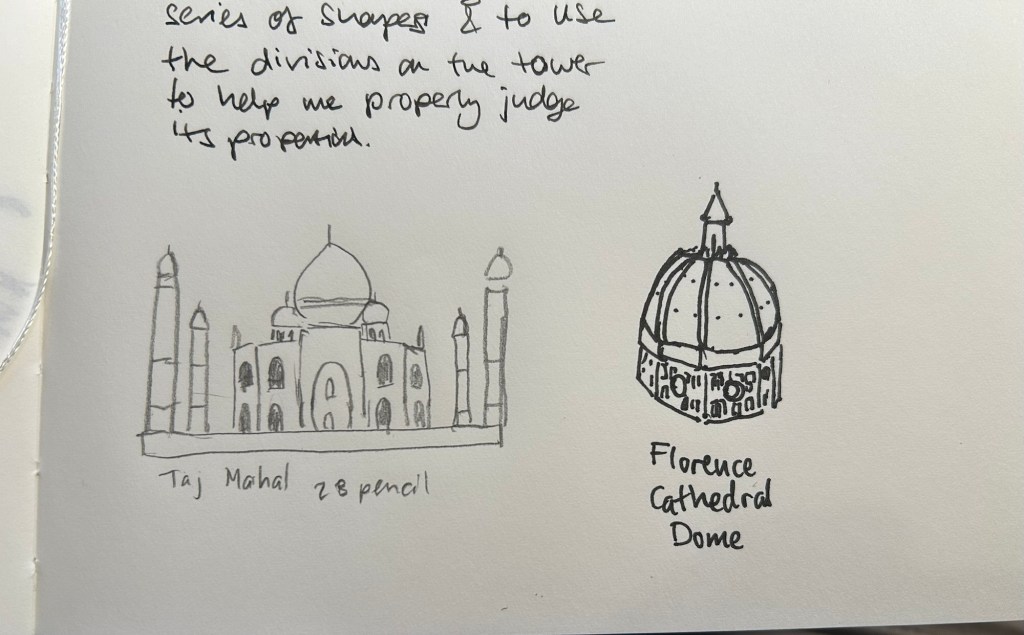
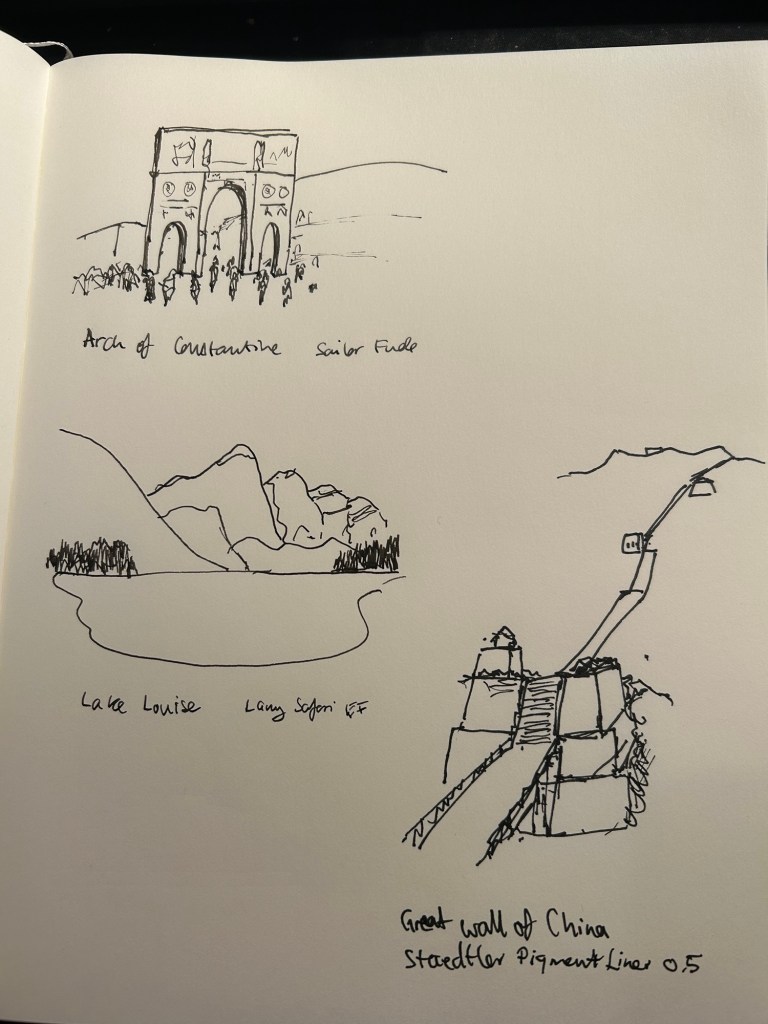
At which point I realised several things:
- I wasn’t really learning anything new this way.
- I hadn’t given the new approach enough of a chance before giving up on it.
- The 7 lines rule isn’t rigid. It’s an artificial limitation that’s supposed to encourage observation and decision making up front, not to have me counting every pencil or pen mark.
So with that in mind, I made two decisions:
- I can use continuous/complex/compound lines as part of the 7 lines. Liz uses them herself, and as they are quick to sketch and require acute observation they remain in the spirit of the rule.
- I can use up to 10 lines if I felt that it was necessary to convey perspective or complicated shapes.
Then I went back and sketched the following using this approach:
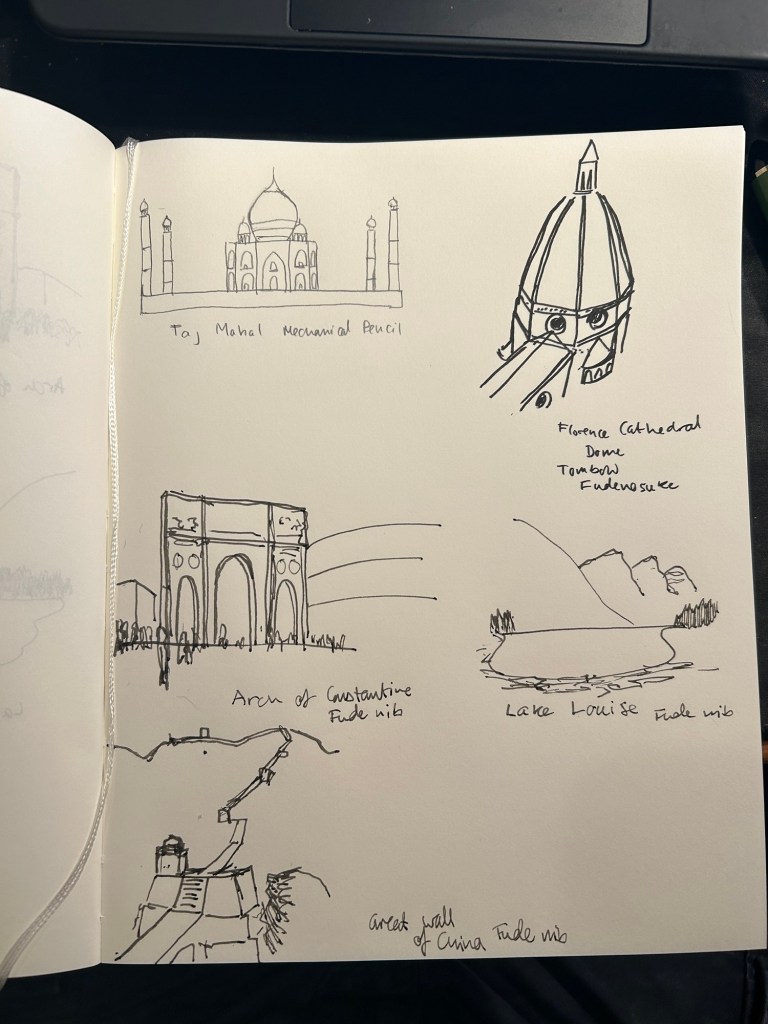
These came out much better than in the first attempt.
Then I sketched two Melbourne scenes:

The Auction Rooms came out particularly effective- 7 lines allowed me to outline the main interest point of the scene (the roof line), and also to outline a car, so I have a feel for the scale of the buildings.
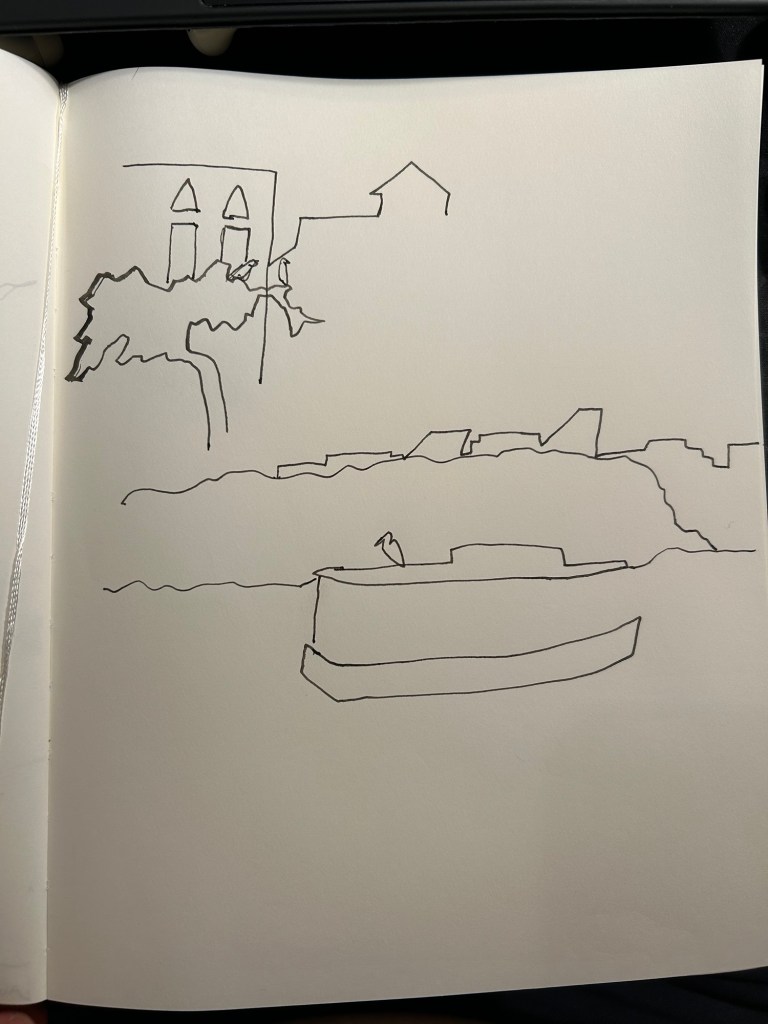
I then sketched two local scenes. The top left scene was of two little egrets waiting to be fed by the local fishmonger. I got the tree, the egrets, the buildings and with two extra lines, the windows.
The bottom sketch was of a heron on a boat in the river. I got the river, the boat, the heron, and the buildings behind the tree line. I would have been very comfortable finishing both sketches either on location or from reference photos with this strong starting point.
The final sketch was of a very complicated building in Paris. I added a few more lines just for reference for where the columns are. Like the rest of these sketches it’s not 100% accurate, and there are slightly wonky bits, but I’m looking for speed and to capture the essence of a scene when I’m travel sketching, not for photorealistic reproduction.

I really struggled with the 7 lines idea at first, but then I allowed myself a bit more freedom within this framework and I found it to be very useful and also an easy idea to carry around with me as I look for interesting things to sketch. If I can envision the scene in 7 lines and it looks interesting with just those lines, then it’s likely worth sketching.
Coming up next is shapes, where we start to work with colour. I’m curious to see what the results will be.
 Writing at Large
Danny Watts
Using 7 lines is an arbitrary goal (this isn’t bullet journaling – LOL). Using continuous lines is the solution to the challenge. Since you mentioned it, have you read or tried continuous line sketches? Simple concept, the pencil or pen never leaves the page until the sketch is done. The entire sketch is a single continuous line.
LikeLiked by 1 person
writingatlarge
Yes, I have tried continuous line sketching in the past, but never as a foundation for a “proper drawing”. I usually treat them as warm up exercises.
LikeLiked by 1 person
rupertarzeian
This is inspiring! Thank you for sharing. It looks like you had fun with these challenges and got some satisfaction and progress.
LikeLiked by 1 person
Pingback: Shana Tova and Quick Update – Writing at Large